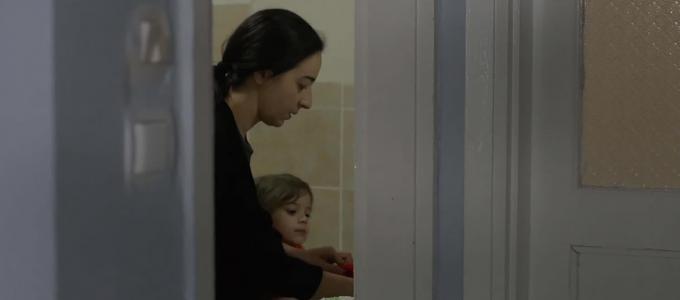
We’re in the suburbs of Istanbul, on the Asian bank of the city. Holding her little girl’s hand, young Nesrin goes in search of her husband Cafer, who has left her without giving a reason. Dust Cloth, in competition at this year’s Bergamo Film Meeting after featuring in the Forum section of the Berlin International Film Festival back in February, shows us the realist approach so typical of new Turkish arthouse film right from the start.
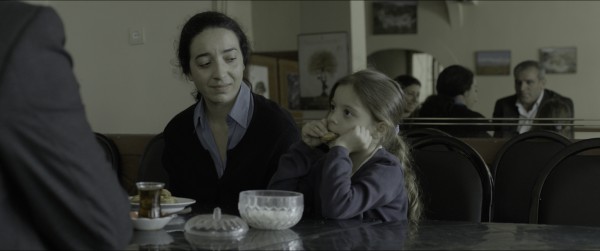
Like the film’s protagonist, the director and screenwriter, Ahu Ozturk, is Kurdish. But this time the ‘Kurdish question’ that has inspired so many directors of new Turkish cinema over recent years (Kazim Oz, Miraz Bezar, Sedat Yilmsz, Zeynel Dogan, Orhan Eskiköy, Ferit Karahan) – is not seen in terms of persecution and violence, but instead, as the director herself explained in an interview with Cineuropa “an observation of the Turkish middle class”.
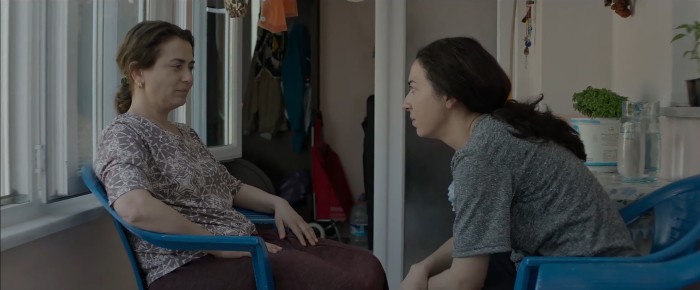
The study of the class relationships which Nuri Bilge Ceylan throws herself into so magnificently in her films is turned on its head by the director of Dust Cloth. Indeed, the middle class citizens of the capital are observed by Nesrin ( Asiye Dinçsoy, Yozgat Blues), who works as a cleaner in the elegant apartments of Kadıköy, and her older colleague and friend Hatun (Nazan Kesal, who has a role in almost all of Ceylan’s films). The former, demure and nervous, is tormented by her husband’s departure, whilst the latter, who is bubbly and sarcastic with a bone idle husband, dreams of having a house of her own, so much so that she goes to a Christian church and prays for a miracle, hoping that Allah won’t consider her actions a sin. The gossip that the two women engage in over their bosses is pure social and cultural critique. Their mirage is built on a steady job with insurance and a nice house. Their reality, on the other hand, is built on obstacles and frustration. The ‘toil of living’, illustrated through reflective critique in recent Turkish arthouse film, according to Giovanni Ottone in his recent book “Nuovo Cinema in Turchia” (Ed. Falsopiano). Another piece of the mosaic of a country with a multitude of identities that is trying more than ever, as we expected, to act as a link between Europe and the Middle East.
After studying philosophy and film, Ahu Öztürk directed documentaries and participated in collective film Tales from Kars, a product of the Festival on Wheels in Ankara in which she participated with her short film Open Wound, the story of Ozan, who returns home for a funeral and discovers the truth about his family history. Dust Cloth is her first feature film, co-produced by Ret Film with German company The Story Bay, and marks the entry of an author into the fourth generation of Turkish directors, who enliven European and world cinema with their recognisably rich material.
Source: Cineuropa



.jpg)


With the support of the Eurimages Fund of the Council of Europe